




By the Northridge Cleaners Bridal Care Team
A wedding dress should fit the person who will wear it, the shoes chosen for the day and the way the celebration will actually unfold. A gown can be the correct labeled size and still need work through the hem, bodice, straps, sleeves or train.
For Northridge and West Valley weddings, the practical question is not whether a dress can be made tighter or shorter. It is how each change affects support, proportion, comfort and movement from the ceremony through the reception.
At Northridge Cleaners, bridal and formalwear work includes wedding gown alterations and custom changes. The process begins with the complete dress and the real event date, followed by a fitting plan suited to the gown’s construction.
Plan the Fittings Around the Complete Wedding Look
Bring the shoes you expect to wear at the ceremony. Even a modest change in heel height changes where the hem meets the floor and how the skirt falls around the body.
Wear the intended bra, cups, shapewear or other foundation garments. Changing them after the bodice is pinned can change the bust line, waist position and amount of support the dress needs.
If the veil, overskirt, belt, detachable sleeves or reception shoes affect the fit, bring them too. The tailor should see how the pieces overlap and whether hooks, snaps or attachment points are needed.
Northridge schedules often involve travel across the Valley for fittings and wedding appointments. Keep the alteration appointments in one calendar and protect the final fitting from avoidable last-minute conflicts.
What to Expect at the First Wedding Dress Fitting
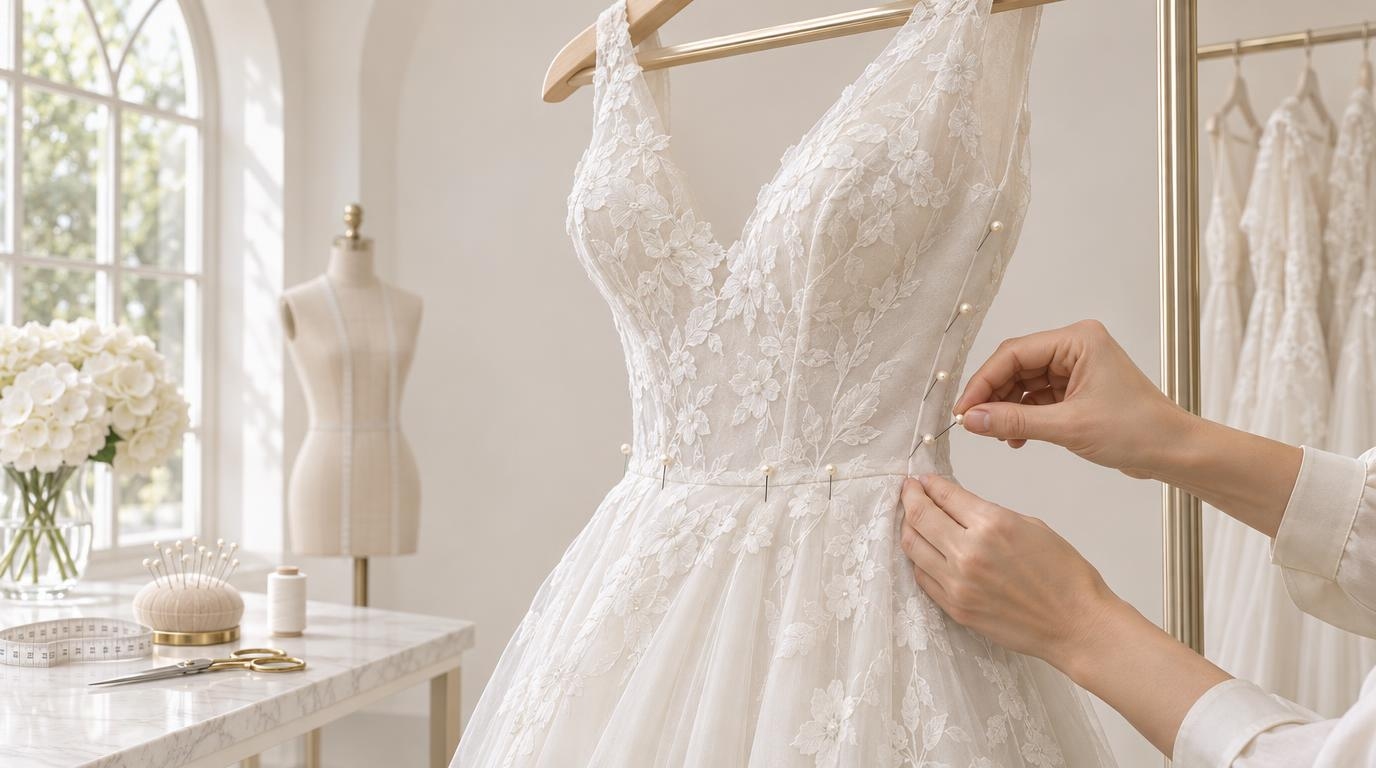
The first fitting is an assessment and planning appointment. The tailor studies how the gown sits on the body, how the internal support behaves and how changes in one area may affect another.
Arrive with the gown uncompressed and allow time to put it on without rushing. Mention any comfort concern, body change, mobility need or styling decision before pinning begins.
A useful first fitting normally covers the following points:
- The wedding date and any earlier portrait or travel deadline
- The intended shoes and foundation garments
- The overall silhouette and the waist position
- Bodice security through the bust and back
- Strap or sleeve length and arm movement
- Hem length around the full skirt
- Train length and the preferred bustle approach
- Lace appliques beading embroidery and other details that must be moved or protected
Ask which changes are essential for fit, which are optional style choices and which may change the original design. The answer should be specific to the actual dress.
Common Wedding Dress Alterations and What They Change
Hemming the Skirt and Balancing the Train
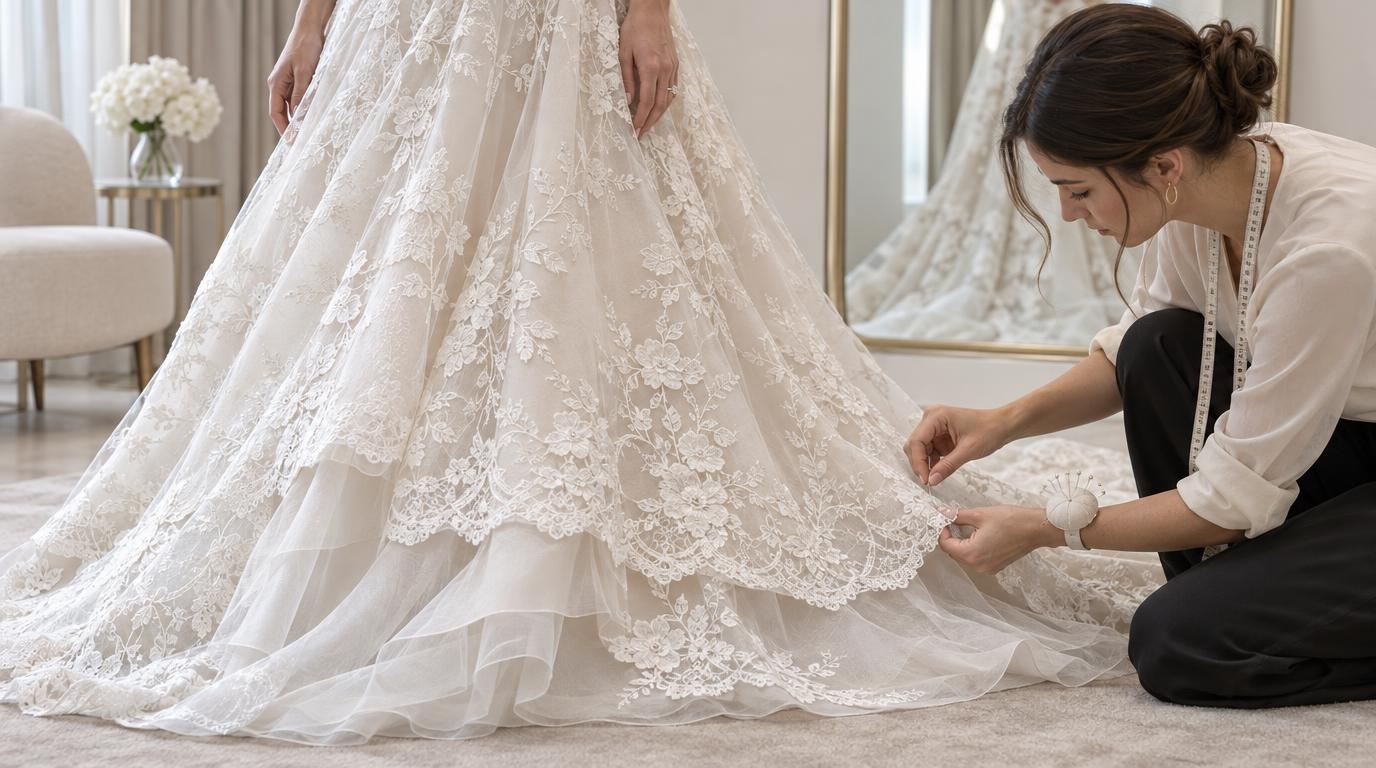
A wedding hem is rarely one straight cut. A full skirt can contain several layers, horsehair braid, lace borders, appliques or a shaped train. Each layer must fall cleanly after the finished length is set.
If a lace edge needs to be removed and reapplied, the work can be more involved than shortening a plain fabric panel. The tailor should explain how the original border will be preserved before work begins.
Adjusting the Bodice Waist and Side Seams
Bodice alterations can improve support and keep the neckline in the intended position. Depending on the gown, the work may involve side seams, princess seams, the back closure, cups, boning or the waist seam.
A tight bodice is not automatically a secure bodice. It should support the dress without restricting breathing, creating severe pulling lines or forcing the wearer to hold one posture all day.
Shortening Straps and Reshaping Necklines
Straps influence the neckline, armhole and bust position. Shortening them too much can pull the bodice upward or create pressure at the shoulders, so the tailor checks the whole upper body rather than treating the strap as an isolated piece.
Neckline changes, modesty panels and back changes can be possible, but the available seam allowance, lace layout and internal structure set real limits.
Adding or Altering Sleeves
Sleeves must allow the motions the wearer will actually make: reaching, hugging, lifting a bouquet, entering a vehicle and dancing. Lace and fitted sleeves may need careful shaping at the shoulder, elbow and wrist.
Creating a Bustle for the Reception
A bustle lifts and secures the train after the ceremony. Common approaches place the train over the skirt, under it or closer to the original hemline. The right choice depends on train length, skirt structure, decoration and the look the wearer prefers.
Bustle points should be discreet, balanced and strong enough for normal reception movement. No bustle is indestructible, so the helper should know every loop and attachment point and should not pull the gown by the bustle.
How Fabric Construction and Decoration Affect the Work
Wedding dresses combine materials that behave differently. Satin can reveal puckering or needle marks. Chiffon can shift while being cut. Tulle layers must remain even. Lace motifs may need to be lifted and reapplied. Beading and embroidery may require handwork before a seam can be opened.
Review the gown’s care label and keep it attached. The label is mainly about cleaning and care, but it also helps identify restrictions that matter when pressing or cleaning is planned around the alterations.
The outer fabric is only part of the job. Linings, boning, cups, interlining, zippers, buttons and hook-and-eye closures all influence how the dress can be changed.
For a vintage, sample or secondhand gown, point out previous alterations, stains, weakened seams or missing details. An inspection may reveal that repair or cleaning should happen before certain fit work begins.
The Fitting Sequence From Rough Work to Final Approval
Many gowns need more than one fitting because alteration decisions build on one another. The exact sequence varies, but a careful process usually moves through these stages:
- Initial assessment measurements pinning and written alteration plan
- Structural fitting for bodice waist seams straps or sleeves
- Hem fitting after the upper fit and shoe height are stable
- Bustle fitting and instruction after the train hangs correctly
- Final fitting with the complete wedding day foundation and shoes
- Pressing or steaming scheduled only after construction work is complete
Do not skip a requested fitting simply because the dress looked close at the previous appointment. A seam can appear different once it is sewn, a hem can change after the bodice settles and a bustle must be tested on the finished train.
How to Test the Dress at the Final Fitting
The final fitting is a functional check, not only a reveal. Wear the intended shoes and foundation garments, then move through the actions the day will require.
- Walk at a normal pace without lifting the front of the skirt
- Sit fully and stand again without the bodice shifting
- Raise both arms and reach forward comfortably
- Turn and take several steps backward for photographs and positioning
- Test every zipper button hook snap and detachable component
- Practice the complete bustle and identify every attachment point
- Check the gown in natural posture from the front side and back
Bring the person who will help dress the wearer or manage the bustle when possible. Record the bustle demonstration only with the tailor’s permission, and store the instructions with the gown.
Alteration Costs Timelines and Last Minute Requests
A reliable quote requires the actual gown. Price and timing depend on the number of layers, seam access, lace placement, beadwork, internal support and how much reshaping is requested.
Two dresses that both need a hem can require very different work. One may have a plain skirt, while another has multiple layers and a lace border that must be removed and repositioned.
Ask what the quote includes, how many fittings are expected, whether pressing is separate and what happens if the design changes after work begins. Confirm the payment and pickup terms directly with the business.
For a short timeline, bring the gown in immediately and disclose the true deadline. The shop can then explain what can be completed safely. Do not assume that every complex alteration can be rushed.
Final Pressing Transport and Post Wedding Care
Schedule bridal pressing and finishing after the sewing is complete. Pressing before the last construction work can be undone by handling, pinning and transport.
At pickup, ask how the gown should be hung, carried and removed from its garment bag. Keep food, makeup, fragrances, pets and moisture away from the dress while it waits for the event.
After the wedding, identify visible spills and point out the hem, underarms, train and bustle area when arranging cleaning. Stains that dry clear can still leave residues, so delayed inspection can make treatment more difficult.
If the gown will be kept, discuss post-wedding cleaning and preservation with the Northridge Cleaners bridal team after the event. Preservation should follow cleaning and a complete inspection of the fabric and details.
Frequently Asked Questions About Wedding Dress Alterations
How early should I start wedding dress alterations
Contact the tailor as soon as the gown arrives and the main shoes and foundation garments are available. Several months can be useful for complex work, but the actual schedule must be confirmed after the gown is inspected.
How many wedding dress fittings will I need
Many gowns need more than one fitting, but there is no fixed number. A simple hem may require fewer appointments than a gown needing bodice reconstruction, sleeves, lace work and a bustle.
What should I bring to a bridal fitting
Bring the wedding shoes, intended undergarments or shapewear and any accessory that affects the fit, such as a belt, overskirt, detachable sleeve or reception shoe.
Can a wedding dress be taken in or let out
Many dresses can be taken in. Letting a gown out depends on the seam allowance, fabric, construction and previous alterations. The tailor must inspect the seams before confirming what is possible.
Can lace and beaded wedding dresses be hemmed
Often yes, but lace borders, appliques and beadwork can make the hem more involved. Some details may need to be removed and reapplied so the finished edge still looks intentional.
What is a wedding dress bustle
A bustle secures the train off the floor for the reception. Its placement and style depend on the train, skirt construction and decoration, and someone should practice fastening it before the wedding.
Can sleeves or a neckline be changed
Some sleeve and neckline changes are possible, but the bodice structure, available fabric, lace pattern and armhole shape determine the safe options. Major design changes need extra planning.
Can you do last minute wedding dress alterations
Availability depends on the gown, the work required and the current schedule. Bring the complete dress to Northridge Cleaners promptly so the team can inspect it and explain what can be completed before the deadline.
Wedding Dress Alterations at Northridge Cleaners
Northridge Cleaners provides bridal and formalwear alterations for customers in Northridge and nearby communities. Every gown should be inspected before the alteration plan, timing and quote are confirmed.
Use the Northridge Cleaners contact page to schedule a fitting and ask what to bring. If transport is a concern, review the pickup and delivery information and confirm whether the gown and required fitting appointments are eligible.
Call Northridge Cleaners at (818) 886-1002 to arrange a wedding dress alteration consultation.