


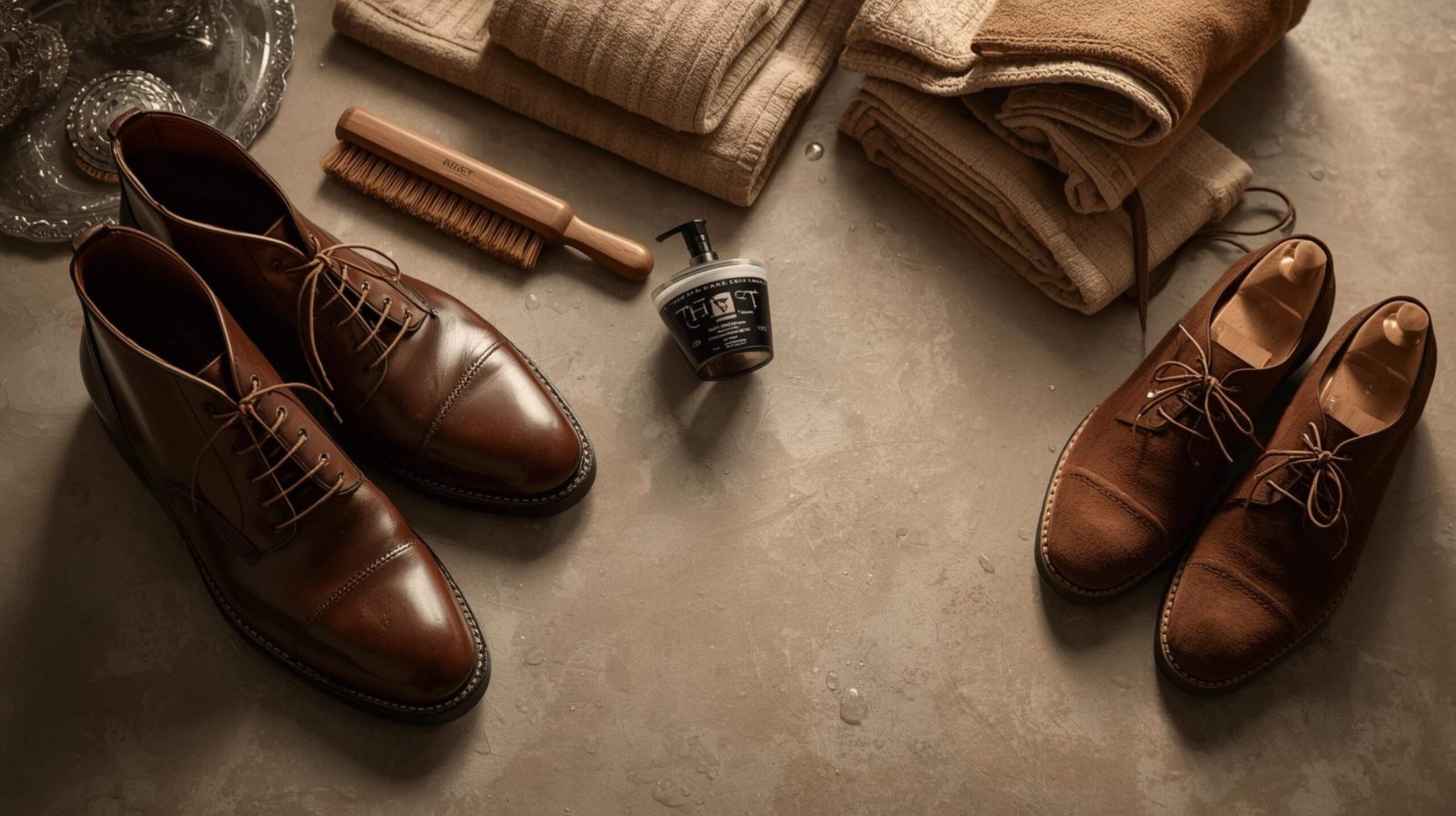
A rainy week in Northridge doesn’t look like a snow city, but it creates the same problem: you wear the same boots and jackets on repeat, they get damp back-to-back, and you do not always have time to dry them properly between commutes, school runs, and errands. That is how “small rain days” quietly turn into water spots, stiff leather, flattened suede, and that faint sour smell that shows up a day later.
The goal of after-rain care is not perfection. It is preventing the three failures that cause most long-term damage: heat drying, trapped moisture, and delayed cleanup. When you avoid those, leather stays flexible, suede keeps its nap, and your boots come out of winter looking the same as they went in.
What “after-rain care” really means
After-rain care is a short sequence that protects shape, texture, and smell.
- Remove moisture without rubbing damage (especially for suede).
- Dry at room temperature and avoid direct heat that can dry out and crack leather.
- Restore structure so boots do not collapse and crease incorrectly while damp.
- Reset texture (suede nap, leather finish) only after the item is fully dry.
- Prevent odor and mold risk by drying wet materials promptly and keeping airflow moving.
Quick message tips you can save
- Do not use a heater, hair dryer, vent, or direct sun to “speed dry” leather.
- Remove insoles and loosen laces so the inside can actually dry.
- Stuff boots with paper to hold shape and absorb moisture; replace as it gets damp.
- Suede gets brushed after it dries, not while it is wet.
- If something is still damp, it is not ready for the closet or a sealed bin.
The After-Rain Care Calendar
Use this cadence all season so one rainy day does not turn into cumulative damage.
After each rainy wear
- Dry and shape-reset (10 minutes)
- Air dry fully (overnight when needed)
Weekly during rainy stretches
- Quick brush and surface clean
- Check seams, soles, and hardware
- Address any odor early
Monthly
- Light conditioning for leather if it feels dry or looks dull (only after fully dry)
- Refresh suede nap and re-protect when needed
End of rainy season
- Full clean and correct storage so items come out next season ready to wear
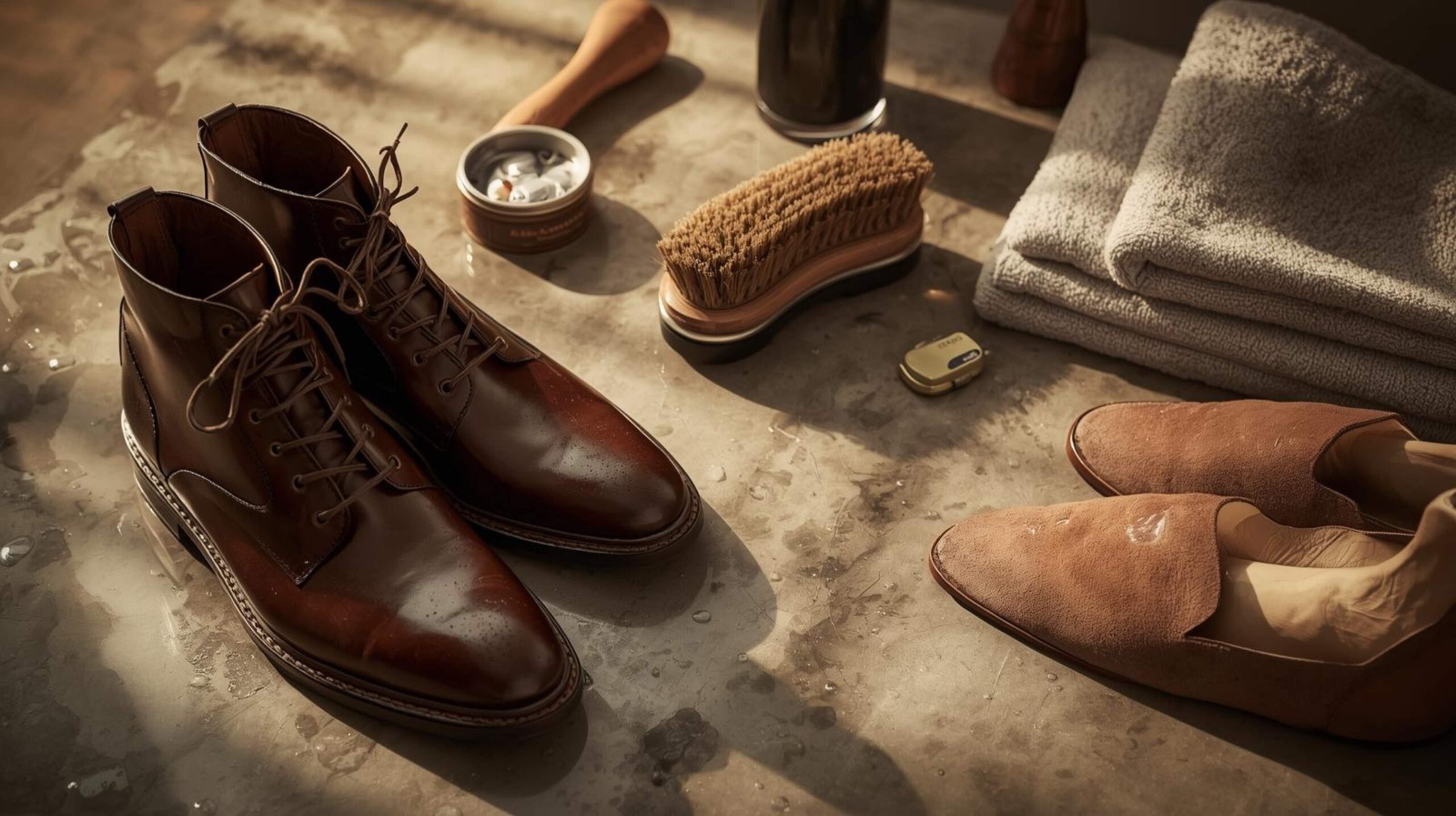
The 3-phase “After-Rain Rescue” routine
Phase 1: The first 10 minutes
This is where most people either save the item or damage it.
Leather boots and leather jackets
- Wipe surface moisture gently with a clean cloth.
- Remove insoles (boots) and loosen laces so the interior can dry.
- Stuff boots with paper to support shape and absorb moisture.
Suede and nubuck
- Blot gently. Do not rub.
- Let it start drying naturally before you touch the surface texture.
Phase 2: Drying overnight
Drying is where leather and suede are most commonly ruined.
- Dry at room temperature with airflow.
- Keep items away from heaters, vents, radiators, blow dryers, and direct sun. Heat can dry leather unevenly and contribute to cracking and stiffness.
- Replace stuffing paper as it becomes damp so moisture is actually pulled out.
A practical guideline: if an item is wet enough that it soaked through, treat it as an overnight dry, not a “couple hours” dry.
Phase 3: The next day (restore and protect)
Do not restore texture or add products until the item is fully dry.
Leather
- Once dry, reassess. If the leather feels stiff or looks dull, a controlled conditioning step is often appropriate, but only after full drying. Guidance from boot-care brands consistently emphasizes air drying first and avoiding direct heat.
Suede / nubuck
- Brush the nap once dry to lift fibers back up and reduce water-mark appearance.
- If you notice water lines after drying, do not keep re-wetting randomly. Use a consistent, careful approach or bring it to a specialist—suede is porous and uneven treatment can lock in patchiness.
Why each material needs a different approach
Leather boots and leather jackets
Leather is durable, but it does not like fast heat. Heat drives moisture out too aggressively and can leave leather dry and brittle. Major boot-care guidance recommends air drying at room temperature and avoiding direct heat sources.
Practical tips
- Prioritize shape: stuffing and proper support prevents collapse creases.
- Clean before you condition: conditioning over grime seals in dirt.
- Do not store until fully dry. Moisture trapped in closets is a reliable path to odor and mold risk.
Suede and nubuck
Suede’s look is the nap. Water flattens it, and rough handling while wet can leave permanent texture changes. Many care guides emphasize drying first, then brushing the nap back up.
Practical tips
- Blot, do not rub.
- Dry fully first, then brush.
- Treat evenly, not in isolated patches, to avoid obvious shade differences.
Shoes and bags that start to smell
Odor is typically moisture plus time. Bacteria and fungus thrive in warm, moist environments like damp footwear, which is why drying speed matters.
Practical tips
- Rotate footwear so pairs get full dry time.
- Remove insoles so the interior can dry properly.
- If odor persists after correct drying, it is usually time for deeper cleaning or professional treatment.
Myth vs truth
Myth: “A little heat helps boots dry faster, so it’s safer.”
Truth: Direct heat is a common cause of dried-out, stiff, and cracked leather. Air drying at room temperature is the standard recommendation from boot-care authorities.
Northridge tips that help this routine stick
- Commute and car reality
Damp boots left in a car or trunk can turn into odor fast. Bring them inside, open them up, and let airflow do the work. - Rain cluster weeks
When rain hits in a cluster, you need rotation. Plan two pairs of “rain-ready” footwear so each pair can dry fully between wears. - Apartment and shared laundry limits
If space is tight, a simple airflow station is enough: open boots, remove insoles, stuff with paper, and place near (not on) gentle circulating air.
Authority tip
If you only do one thing after rain, do this: remove insoles, stuff to hold shape, and air dry fully at room temperature. That single move prevents most odor and shape damage.
FAQ
How long should wet boots air dry
It depends on how soaked they are and airflow, but many practical guides describe typical air drying as a 12–24 hour window for shoes in normal indoor conditions, sometimes longer for heavy boots.
Should I use a hair dryer or heater if I am in a hurry
No. Boot-care guidance repeatedly warns against direct heat because it can dry out leather and contribute to cracking and stiffness.
When should I brush suede
After it dries. Brushing dry suede helps lift the nap and restore appearance.
What if I see water spots on suede after drying
Do not aggressively spot-rub. Uneven treatment often makes it worse. Either use a careful, even method or bring it to a specialist.
How do I prevent mold and musty odor
Dry wet items promptly and keep areas ventilated. Public health guidance emphasizes drying within roughly 24–48 hours and controlling moisture to prevent mold growth.
How we help at Northridge Cleaners
Leather and suede are the items people hesitate to clean because they are easy to damage with the wrong approach. That is exactly why professional handling matters.
At northridgecleaners.com, we provide leather and suede cleaning and repair services including reconditioning, recoloring, and repairs for leather and suede items. We also help with finishing and presentation so your pieces look right, not just “clean.”
If you need service closer to the foothills, use lacrescentacleaner.com. If you are closer to Burbank / Media District, use alamedadrycleaners.com.
Ready to get back on schedule
If rainy weeks have your boots, jackets, or bags starting to look dull, feel stiff, or smell off, do the after-rain routine above and do not wait for damage to set. The fastest win is preventing trapped moisture and restoring the material correctly once it is fully dry. For leather and suede pieces that need specialist cleaning, repair, or reconditioning, we can help.
Northridge Cleaners
9250 Reseda Blvd. #12, Northridge, CA 91324
(818) 886-1002
Links and resources
Northridge Cleaners links
Leather & Suede Cleaning & Repair
Cross-links to your other locations