


Take the coat out before the first cold morning, inspect it in bright light, and read the entire care label before you clean or steam it. Air a clean-smelling piece, but stop if you find a lasting odor, set stain, moth sign, loose lining or damaged closure.
What months in a closet can do to winter clothes
Storage can hide a problem that started last season. Dust settles into the nap of wool, body oil darkens a collar, and a small food spot can become more visible over time. A lining may hold stale odor even when the shell still looks clean.
Clothes-moth larvae feed on animal fibers and often stay in protected areas such as folds, cuffs and seams. A quick glance at the shoulders will miss those places. Down has a different warning sign: compressed or damp fill can lose loft and develop an uneven smell.
Our counter is on Reseda Blvd across from the campus, so many customers drop off a coat on the way to class or work and collect it on the way home.
If the fabric, label or construction leaves you unsure, arrange an inspection. Book a pickup
The five-minute check before you wear anything
Set one garment on a clean surface under strong light. Work from the outside in so a small defect does not disappear in a pile.
- Smell the shell and lining separately, then air the garment in a dry shaded place.
- Inspect the collar, cuffs, pocket edges and hem for makeup, food, yellowing or dark body oil.
- Open folds and seams to look for webbing, shed fibers, grains, holes or live insects.
- Turn out as much lining as you safely can and check for tears, puckering or loose stitches.
- Empty every pocket, test buttons and zippers gently, and read the complete care label.
What you can refresh at home
Start with the care label because its instruction covers the whole garment, including trim, fasteners and lining. A washable shell does not automatically make a structured shoulder, glued detail or leather trim safe in a home machine.
| Condition | Home step | Stop and bring it in |
|---|---|---|
| Light surface dust | Use a clean clothes brush or lint roller, then air in shade. | Odor remains after airing. |
| Washable knit | Follow every label direction and reshape as instructed. | Color transfers, the knit felts or its size changes. |
| Washable down | Use a roomy machine only if the label allows it; dry fully. | Fill stays clumped, trim is delicate or the machine is crowded. |
| Small mark | Blot only when the label and stain type make that safe. | The stain is oily, old, unknown, spreading or on a tailored piece. |
Skip fragrance sprays and improvised stain mixtures. They can cover odor, spread dye or leave a ring. Keep high heat away until the label and construction clearly permit it.
When a coat or sweater needs an assessment
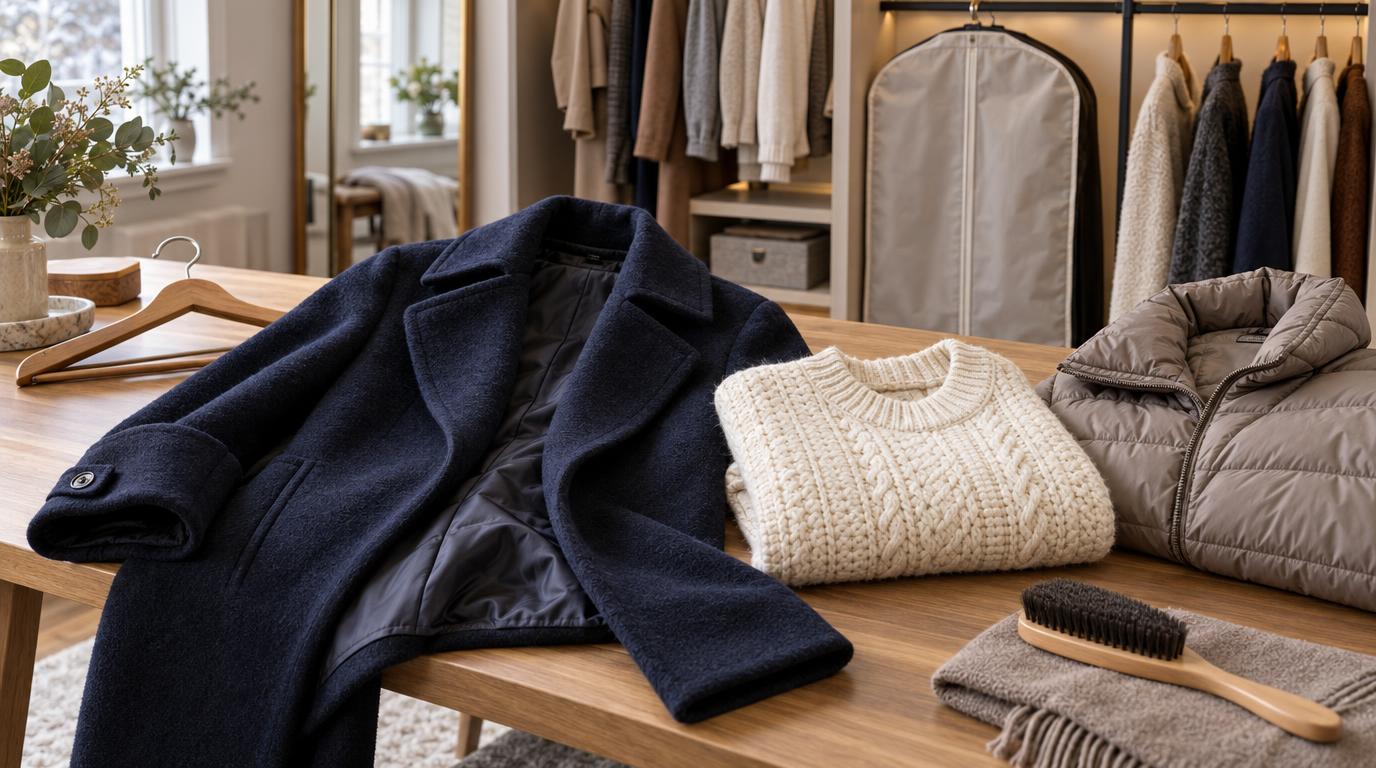
Bring in a dry-clean-only piece, a structured wool coat, a lined jacket with a visible stain, or a garment whose musty smell remains after airing. Stop home treatment if the stain source is unknown, a color looks unstable, the lining pulls, or insect evidence appears.
Tell us what you noticed and what you already tried. Point out the exact spot at check-in. Some stains, holes and felted fibers cannot be fully corrected, and the safe limit depends on the garment in front of us.
How to store winter clothes next spring
Clean each piece before long storage and make sure every layer is dry. Fold sweaters and soft knits so their shoulders do not stretch. Give a tailored coat a supportive hanger and enough space that its lapels and lining are not crushed.
Use a breathable garment cover rather than sealing a delicate item in plastic. Empty pockets, secure loose closures without straining them, and inspect the closet before returning animal-fiber clothing if you found moth evidence.
Questions we get at the counter
Can I wear a coat if it only smells dusty?
Air it in a dry, shaded place and check the lining, collar and cuffs again. If the smell clears and there is no stain, dampness or insect evidence, follow the label for any further care. If the odor remains, do not cover it with fragrance; bring the coat in so the source and safe method can be assessed.
Can I wash a down jacket at home?
Only if the care label permits washing and your machine gives the jacket room to move. The fill must dry completely and return to even loft. If the jacket is oversized, heavily soiled, trimmed with another material or still clumped after label-safe care, stop and ask for an inspection.
What should I do if I find moth holes?
Separate the affected item from other wool and animal-fiber garments. Inspect folds, seams and the storage area for larvae, webbing or shed fibers. Cleaning can address insects on a garment, but it does not close a hole or rebuild weakened yarn, so cleaning and repair need separate decisions.
For an inspection before the first cold day, call (818) 886-1002 or book a pickup.