



By the Northridge Cleaners Leather Care Team
A favorite leather jacket or bag often shows damage in one high-use area before the rest of the item is worn out. A zipper fails, a cuff seam opens, the lining tears, or a shoulder strap weakens where it carries the most weight.
Northridge heat, dry air, body oils and sunscreen can also change the feel and color of leather around collars, cuffs and handles. Repairing the construction without addressing that surface condition can leave the item uneven or allow nearby material to fail later.
At Northridge Cleaners, leather and suede services include cleaning, conditioning, recoloring and repairs for jackets, coats, handbags, pants, skirts and accessories. The first step is an inspection of the actual item.
Northridge Wear Patterns to Check Early
Look closely at the collar, cuffs and pocket edges of frequently worn jackets. Darkening from body oils, sunscreen and handling can sit next to dry or faded sections, so cleaning and color balancing may be discussed with the repair.
Check the ends of zippers and the leather immediately around snaps. A fastener that pulls against weakened material can enlarge a small split each time it is used.
For backpacks, briefcases and handbags, inspect where straps enter the body of the bag. If the stitches are stretching or the leather feels thin, reduce the load and bring the item in before the attachment tears free.
Do not leave a damaged leather item in a hot vehicle or direct window light. Heat can stiffen the hide, affect adhesives and make color differences more noticeable before the repair is evaluated.
What Leather Repair Can Address
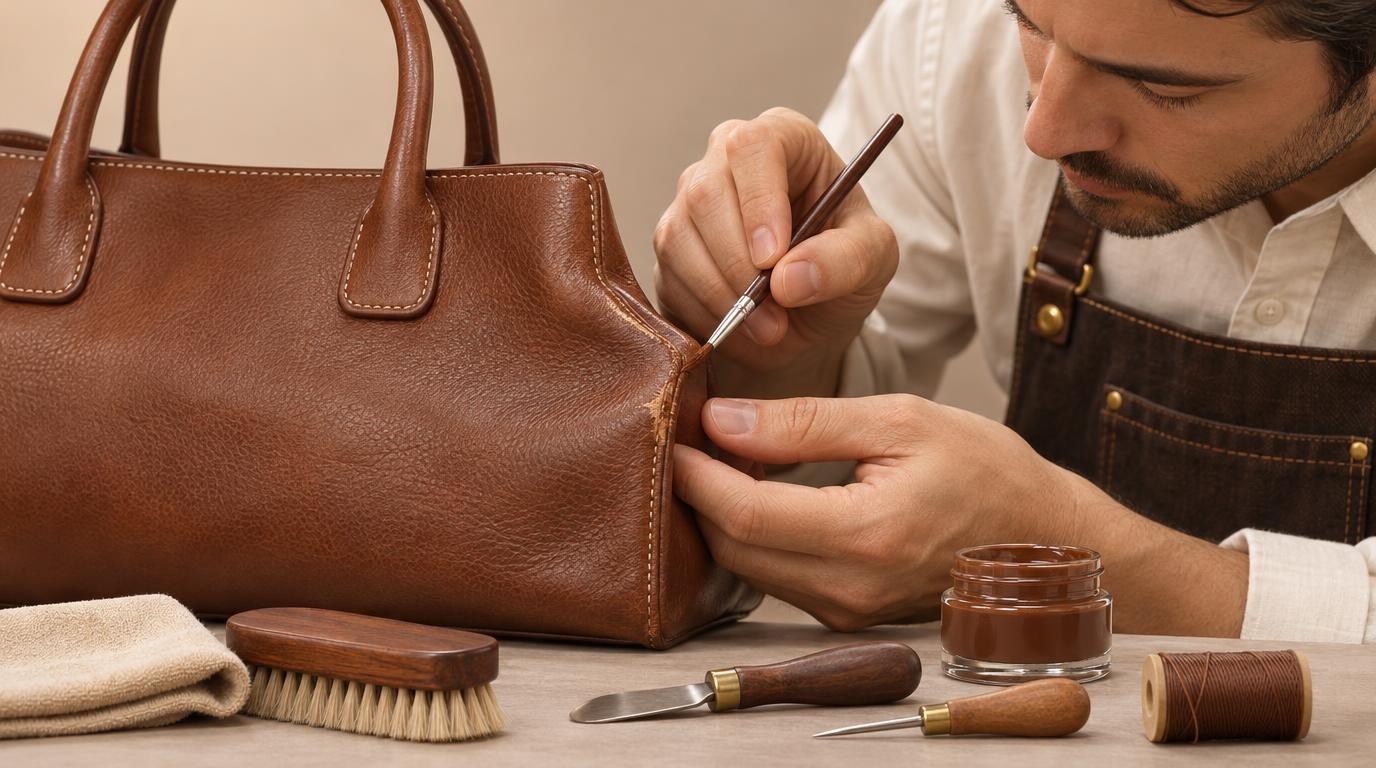
Leather repair is a group of services rather than one universal procedure. The safe option depends on the type of leather, its finish, the strength of the surrounding material and the way the item is built.
Common requests include the following:
- Restitching an opened seam when the surrounding leather remains strong
- Reinforcing a stressed pocket corner or strap attachment
- Patching a tear or puncture from the inside or outside
- Replacing or repairing a zipper snap buckle or other hardware
- Repairing or replacing a torn lining
- Securing loose trim piping tabs or decorative pieces
- Conditioning dry leather after compatible cleaning
- Refreshing worn color or edge finish where the material allows
- Making selected fit adjustments when the panel layout and seam allowance permit
The most durable solution is not always the least visible one. A repair specialist may recommend reinforcement that leaves a small change in texture or stitching because the original material can no longer carry the load by itself.
Identify the Material Before Choosing a Method
Smooth leather, aniline leather, pigmented leather, nubuck, suede, bonded material and synthetic leather do not respond the same way to moisture, heat, adhesives, dye or abrasion. Two black jackets can require completely different repair and finishing methods.
Aniline and semi-aniline leather often show natural markings and absorb oils readily. Pigmented leather has a surface coating that can wear, crack or separate. Suede and nubuck depend on an even nap, so heavy rubbing or the wrong liquid can leave a shiny patch.
Synthetic and bonded materials can peel or delaminate in ways that traditional leather repair cannot reverse. A patch or panel replacement may still be possible, but applying leather conditioner will not rebuild a failing manufactured surface.
Keep the original care label attached when the item has one. It can help identify material and care restrictions, although the repair specialist still needs to test the finish and inspect the construction.
How the Repair Assessment Works
A useful assessment looks beyond the obvious defect. The specialist checks whether the leather around a tear is strong enough to hold new stitches, whether a zipper failure comes from the slider or the full zipper, and whether a dark spot is soil, oil, dye transfer or permanent finish damage.
Bring the whole item rather than a photograph alone. Photos can help with an initial conversation, but they do not show thickness, flexibility, odor, hidden cracking, seam access or the condition of the lining.
At intake, point out every concern and explain how the item is used. A daily bag that carries a laptop needs a different reinforcement discussion from a decorative clutch. A riding jacket, fashion jacket and costume piece also place different demands on a repair.
Ask for the scope in plain terms: what will be opened, stitched, patched, replaced, recolored or conditioned; which changes may remain visible; and what parts are outside the estimate. Price and timing should follow the inspection rather than a generic promise.
Seam Tear and Patch Repairs
Open Seams
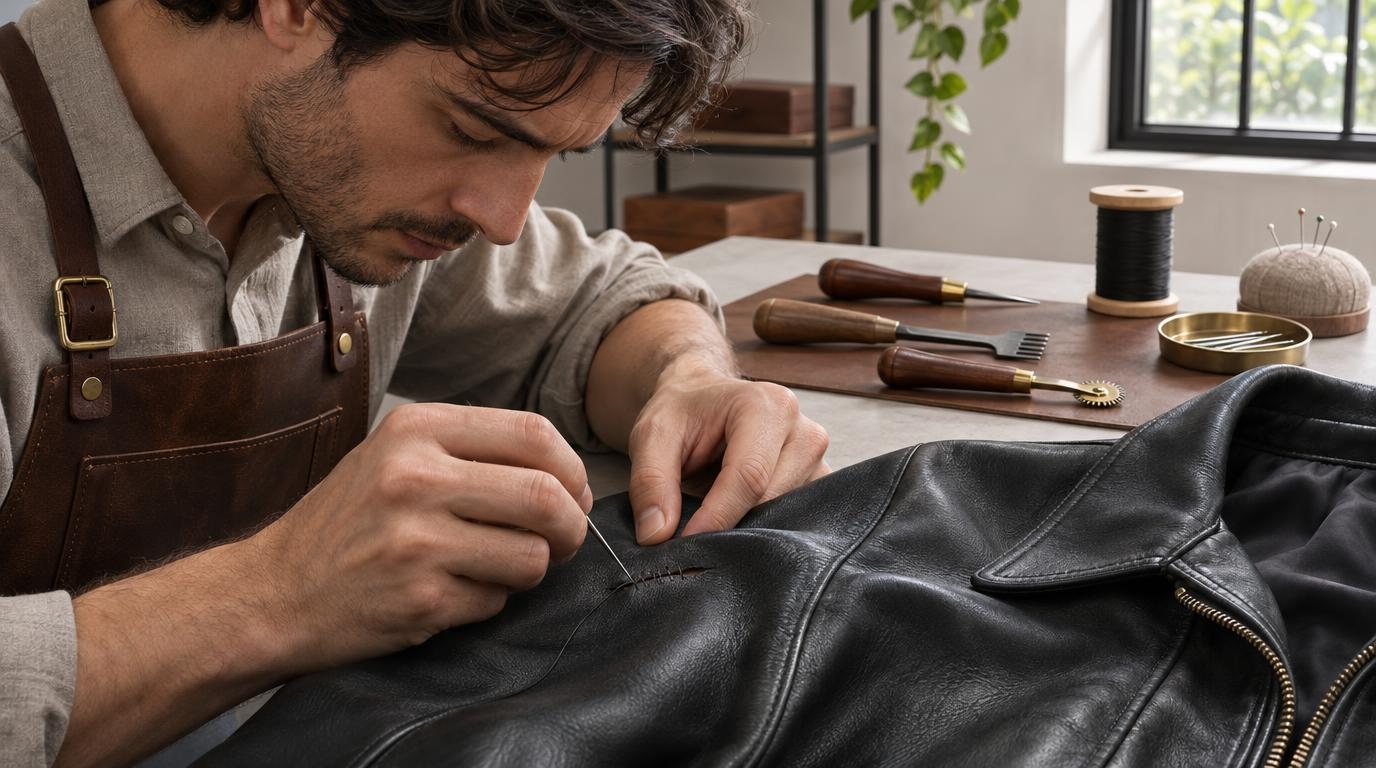
An open seam is often the most repairable type of damage when the stitching failed but the leather edge is intact. The specialist may remove loose thread, realign the panels and restitch through usable material.
If the original stitch holes have enlarged or the edge has torn away, sewing through the same line may fail again. Reinforcement, a backing material or a slightly different seam position may be needed.
Tears and Punctures
A clean cut, an L-shaped tear and a worn-through area each behave differently. Small damage may be backed and bonded, then colored to reduce contrast. Larger or load-bearing damage may need a visible patch or panel work.
A repaired tear usually remains a repaired area. Grain, pores, fading and stretch cannot always be duplicated, especially on natural or aged leather. Agree on the acceptable appearance before the work begins.
Straps Handles and Stress Points
Bag handles, belt loops and shoulder straps concentrate force in a small area. Reattaching the loose end without strengthening the surrounding structure can lead to another failure beside the repair.
Empty the bag before drop-off and provide any detached piece. If the original leather is too weak, the practical choice may be a replacement tab, new section or redesigned attachment rather than a simple restitch.
Zippers Hardware and Linings
A zipper problem may come from the slider, teeth, bottom stop, insertion pin, tape or the stitching that connects the zipper to the leather. Replacing only the slider is useful when the rest is sound; a damaged chain or tape may require full zipper replacement.
Zipper replacement can be substantial on lined jackets and fitted boots because the original construction must be opened and rebuilt. The new zipper should suit the weight, length, color and function of the item.
Snaps, rivets, buckles and magnetic closures need secure backing. If the leather around the hardware has split or stretched, the repair may include reinforcement before new hardware is installed.
A torn lining can catch on clothing and place extra strain on internal seams. Depending on its condition, the lining may be repaired locally or replaced. Discuss pockets, labels, interior zippers and original details that should be retained.
Color Restoration and Surface Repair
Color work can reduce the contrast of scuffs, faded panels, worn edges and patched areas, but it is not the same as replacing the original surface. Natural variation, sun fading and absorbed oils affect how evenly new color takes.
A custom match is usually judged against the surrounding item under practical light. Black and dark brown still have undertones and sheen differences, while light or unusual colors can reveal small variations more easily.
Cleaning may be needed before recoloring because surface soil and oils interfere with adhesion and color balance. Conditioning may follow if it is compatible with the finish. The order matters, so avoid household polish, marker, shoe dye or oil before the item is inspected.
Suede and nubuck color work must preserve the nap. Heavy coating can flatten the surface and make it look painted, which is why improvement may be more realistic than a factory-new appearance.
What Repair Cannot Promise
A professional assessment should include limits. Repair cannot restore missing original grain, reverse widespread peeling, make severely weakened leather strong everywhere or guarantee that aged color will match perfectly.
Water, heat, adhesive, ink and do-it-yourself dye can permanently change the finish. Old repairs may also restrict access or leave residue that affects the next method. Disclose any product or treatment already used.
If the hide is brittle across a large area, strong new stitching can act like a perforation line and create another tear. In that case, stabilization, panel replacement, limited cosmetic improvement or retirement of the item may be the safer recommendation.
Sentimental value can justify a repair that would not make financial sense for an ordinary item. Decide whether the goal is daily use, occasional display, preservation of original material or a clean cosmetic appearance, because one repair may not maximize all four.
What to Do Before Bringing In Damaged Leather
- Stop using the item if weight or movement is enlarging the damage
- Keep every detached tab buckle pull snap or leather fragment
- Blot fresh moisture without rubbing and dry at room temperature
- Do not use super glue tape marker household solvent or shoe polish
- Do not trim frayed edges or pull loose threads
- Empty bags and pockets and remove unrelated accessories
- Write down the deadline and any prior cleaning dye or repair history
- Bring matching detachable pieces when color or hardware must be compared
Place the item in a breathable cover for transport. Avoid sealed plastic if the piece is damp or has an odor, since trapped moisture can worsen the condition before inspection.
How to Decide Whether to Repair or Replace
Start with condition. A well-built item with localized damage is usually a stronger repair candidate than a piece with widespread cracking, peeling or weakened panels. Construction quality and access to the damaged area also affect cost.
Consider function next. A decorative repair can be successful even when it would not withstand daily weight, repeated flexing or protective use. Tell the specialist exactly how the item must perform after repair.
Then compare the estimate with replacement cost, fit, sentimental value and material quality. A vintage jacket that fits perfectly or a bag with personal meaning may deserve careful restoration even when a new mass-market item costs less.
If replacement parts will look different, ask to see or discuss the proposed zipper, lining, patch material or hardware. Approve the practical tradeoff before the original construction is opened.
Care After Leather Repair
Follow the specific instructions provided with the finished item. Adhesives, color coatings and conditioners may need time before heavy use or exposure to moisture.
Use broad hangers for jackets and coats, avoid overloading bag straps, and store leather away from direct sun, heaters and humid sealed spaces. Support bags so repaired corners and handles are not crushed.
Wipe only compatible finished leather with a soft cloth and treat suede with tools suited to its nap. Test any care product in a hidden area, and do not assume a product used on shoes is safe for a jacket or handbag.
Arrange periodic leather and suede care when soil, oils, dryness or fading begin to appear. Cleaning and conditioning at the appropriate time can reduce stress on seams and repaired areas.
Frequently Asked Questions About Leather Repair
Can torn leather be repaired
Many localized tears can be backed, bonded, patched or stitched, but the method depends on the strength, finish and location of the surrounding leather. The repair may remain visible, especially on smooth or naturally varied surfaces.
Can a leather jacket zipper be replaced
Often yes. The specialist first checks whether only the slider failed or whether the zipper chain, tape, bottom components or attachment stitching require full replacement.
Can a torn leather jacket lining be replaced
A damaged lining may be repaired in one area or replaced when wear is extensive. Pockets, labels, vents and interior details affect the work and should be reviewed before the original lining is removed.
Will a leather patch be invisible
Usually not completely. Grain, color, sheen and age vary across leather. Careful placement and color work may reduce contrast, but the honest goal is a secure repair with an appearance approved in advance.
Can faded or scratched leather be recolored
Some finished leather can be cleaned and recolored or touched up. Results depend on the finish, absorbed oils, depth of damage and color. Suede, aniline leather and peeling synthetic surfaces have different limitations.
Can peeling leather be repaired
Widespread peeling often indicates failure of a coating, bonded layer or synthetic surface. Spot improvement or panel replacement may be possible, but conditioner cannot recreate material that has separated.
How much does leather repair cost
Cost depends on the material, access, repair size, replacement parts, lining work, cleaning, color restoration and expected finish. Bring the complete item for an inspection and written scope.
How long does leather repair take
Timing depends on the damage, parts, cleaning or color work and the current schedule. Contact Northridge Cleaners with the real deadline, but allow the team to inspect the item before confirming a ready date.
Leather Repair at Northridge Cleaners
Northridge Cleaners provides leather and suede cleaning repair and restoration for customers in Northridge and nearby communities. Jackets, coats, bags, shoes and accessories should be inspected before the repair method, appearance, price and timing are confirmed.
Review the related service information or use the Northridge Cleaners contact page to describe the item and arrange an assessment. If transport is needed, check the pickup and delivery information and confirm that the item is eligible.
Call Northridge Cleaners at (818) 886-1002 to arrange a leather